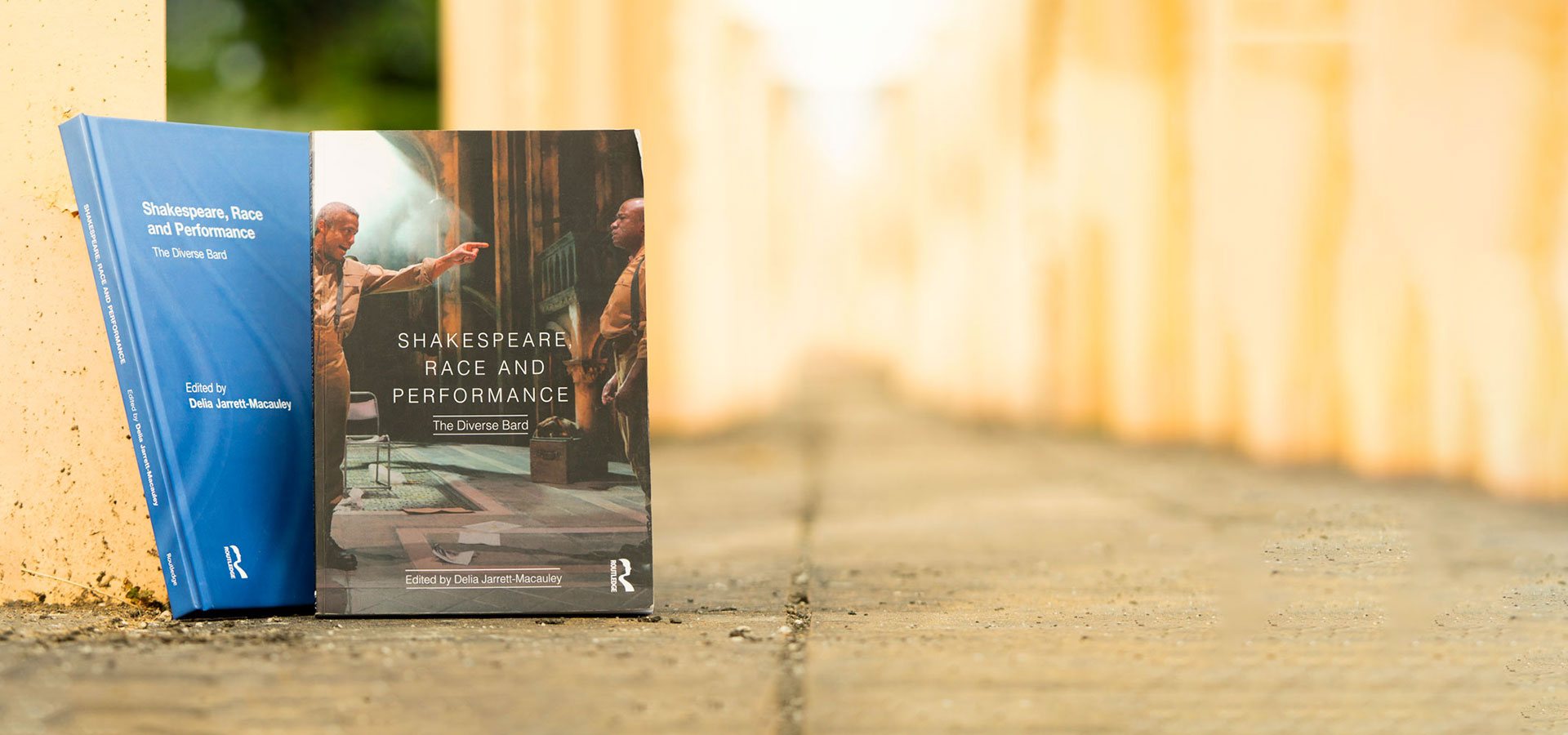
Author: Delia Jarrett-Macauley

  • The Diverse Bard:Shakespeare, Race and Performance

    The Diverse Bard:Shakespeare, Race and Performance

    Publication date: 2017
    Publisher: Routledge
    ISBN: 978-1-138-91382-0

    Buy at Amazon
    Get it on Ibooks

    Delia’s work on Shakespeare resulted in a number of exciting projects.

    She joined the London Book Fair delegation to China and spoke at The Shanghai International Book Fair and at various events in Beijing, including the Beijing Book Fair’s Cultural Industries Forum. She was filmed for the British Council’s ‘Walking the cities’ series in Rome and was funded to travel to Nairobi to work with Storymoja on Intergenerational Storytelling.

  • The Orwell Youth Prize

    The Orwell Youth Prize

    The Orwell Youth Prize, one of my favourite prizes, is targeted at writers aged 14-18. Anyone in that age group is allowed to enter, but what I enjoy most about the OYP, as a writer, are the schools workshops which enable students to think about political writing, discuss Orwell’s work and develop their own ideas along specified themes. On several occasions, I’ve taken part in the OYP Celebration Day at Pembroke College, Oxford, which brings together talented young writers, their teachers and published authors and journalists.

    Twitter @OrwellYouthPriz
    Facebook @OrwellYouthPrize
    or visit our website:  orwellfoundation.com

  • Chair of Caine Prize Board of Trustees (2016 – )

    Chair of Caine Prize Board of Trustees (2016 – )

    For nearly twenty years The Caine Prize for African Writing has been regarded as a leading literary award and it has honoured a stream of talented authors from across the African continent and the diaspora. In late spring 2016, I succeeded Jonathan Taylor as The Chair of the Board of Trustees, a role which draws on both my creative and organisational skills.

    Please see the blog post

  • Othello can be white, Romeo can be a girl

    Othello can be white, Romeo can be a girl

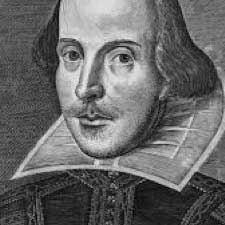
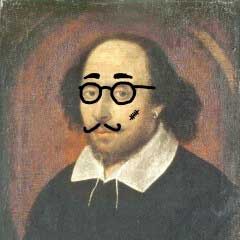
    Photo: William Shakespeare, First Folio
    Courtesy of www.ox.ac.uk

    “Several years ago in 2007 when I served as a judge for the Caine Prize (commonly known as the African Booker), the winner of the short story competition was the Ugandan writer Monica Arac de Nyeko, whose story Jambula Tree told of the tender love between two girls.

    The love between the girls flies in the face of their society’s conventions but gives them strength, confidence and purpose. It was clear to the Caine Prize judges and to other readerts of the Jambula Tree that the writing of this story of forbidden love took some daring on the part of the young author. It was the same kind of daring that prompted Radclyffe Hall to pen The Well of Loneliness, and for Jackie Kay to produce The Adoption Papers.

    The prevalence of homophobic laws and anti-gay feeling across several African countries has recently been in the news. On the BBC website a depressing map of discrimination appeared, and in January of this year another Caine Prize winner, the Kenyan memoirist Binyawanga Wainana, wrote ‘I Am a Homosexual, Mum,’ a ‘lost chapter’ to his memoir One Day I Will Write About This Place to coincide with his 43rd birthday, and subsequently received numerous letters of support from writers and artists across the globe.

    The Caine Prize, one of many, many literary awards, is perhaps serving inadvertently as a means to push new thinking about what it means to be ‘African’ as well as new writing from the people of African origin and descent.

    And what does this have to do with Shakespeare?

    For Warwick University’s AHRC funded project on Multicultural Shakespeare, I recently devised a writing competition Othello can be white, Romeo can be a girl aimed at young writers (14-25, to be judged in two categories) to give them the opportunity to share their thoughts and experiences of the casting of Shakespeare’s plays. Working with 30 schools, local authorities, colleges and theatre companies, we are looking for original, engaged responses that show knowledge and creativity in exploring how the plays have been cast or could be cast for an imaginary stage, film or TV production. We are certainly not only thinking about ‘race’, skin colour or ethnicity; nor are we only interested in the two plays referred to in the title of the competition. Entries can focus on any Shakespeare play or film. Entrants can respond in a piece of creative writing, exploring their ideas more generally, or in an essay-based format.

    Although the creative process is intrinsically an embattled one, often requiring the artist to fight multiple demons, writing competitions can help scribes to share the struggle and to give voice to ideas, feelings and personal insights that would otherwise remain hidden. Competing for a tangible reward and public acknowledgement can be a spur to making a daring statement, to writing the lost chapter or even paragraph of a play, a film or a book.

    Alas, Othello can be white, Romeo can be a girl is running as a pilot competition (not open to the general public), but welcoming submissions from a wide cross-section of schools, colleges, writing groups and theatres with which the project has been in contact over the last year. This group includes drama schools such as RADA, Bristol Grammar School, Royal Holloway College, London, the Curve Theatre in Leicester and the Tricycle Theatre in north London, as well as schools and academies in Lancashire, Yorkshire and Slough.

    From these different places we expect to capture a sense of young peoples’ views on the staging of Shakespeare’s plays today. If the youthful audience that packed out the Barbican Theatre for Tom Morris’s recent Bristol Old Vic production of A Midsummer Night’s Dream is anything to go by, the appetite for non-traditional casting is alive and well; in addition to partnering with Handspring Puppet Company, whose puppets convey both mysticism and devilishness, there was a multi-racial cast of young men and women mostly appearing costumed as carpenters’ mates, Hermia played with full feistiness by Akiya Henry, and the cheeky Bottom bringing Miltos Yerolemou even more fans.

    The riotous comedy that kept the Barbican audience in their seats until the play closed with the majestic swaying Oberon and Titania bidding us farewell, was a far cry from the quiet sensibility threaded through Monica Arac De Nyeko’s Jambula Tree love story. Both productions were bold and experimental, however.

    Creative writing competitions can encourage boldness, daring and experimentation. They can also encourage us to be more considered and reflective. The winners in each category of the Othello can be white, Romeo can be a girl competition will receive £200 cash and tickets to Shakespeare’s Globe; there are prizes for the runners up too. We hope there will be many rewards from participation.

    Apart from winning the Caine Prize for her story back in 2007, Monica Arac de Nyeko’s bravery is being further rewarded. Her short story has been made into a film, a South-African/Kenyan production, by the Kenyan film-maker Wanuri Kahui, better known for sci-fi. The screen version of Jambula Tree is already garnering praise and Monica is set to become more famous.”

  • Delia Guest at ‘Africa Writes’ Symposium

    Delia Guest at ‘Africa Writes’ Symposium

    A symposium featuring translators, writers, artists and academics. opened the 2013 ‘Africa Writes’ literature and book festival at the British Library in London. Delia was invited to sit on one of the symposium panels, which were chaired by Dr Mpalive Msiska (Reader in English & Humanities) and Hannah Pool (journalist, author & curator).

    Africa in Translation: Something Old, Something New, Something Borrowed…’, discussed how the digital, written and oral words interact to transfer knowledge and meaning across real life and different media and cultural forms stemming from Africa and the diaspora, shaping the continent and perceptions of African development.

    The symposium was organised in partnership with SIDENSI, which promotes intercultural dialogue through translation and traducture.

    For more information on this and other events held during the festival, visit africawrites.org

  • Bath and Bristol Event is Yardstick for African Writing

    Bath and Bristol Event is Yardstick for African Writing

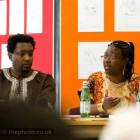
    Discussion Panel: Lost in Translation, Bath
    Delia (panel chair) with Mukoma Wa Ngugi
    Courtesy of thephoto.co.uk

    A dozen of the best writers and performance poets from across the African Diaspora took part in the 2013 Yardstick Festival in Bristol and Bath from June 27 to 30.

    The four-day event contained a rich mix of literature, performance poetry and art, as well as a range of though-provoking panel discussions. Delia chaired the translation panel ‘Whose language is it anyway?’ featuring writers and scholars Mukoma wa Ngugi, Nick Makoha, Jamala Safari, Warsan Shire and Marie-Annick Gournet.

    Other prestigious authors at the festival included Lorna Goodison, Tanya Shirley, Geoffrey Philp (all Jamaican), Lemn Sissay (British Ethiopian) and Leeto Thale (South African).

  • Delia Goes Cock-a-Hoop for Shakespeare

    Delia Goes Cock-a-Hoop for Shakespeare

    Bath Spa University invited Delia to speak at a national symposium exploring Shakespeare in the New Millennium.

    Hosted by the Department of Performing Arts, in partnership with the Bristol Shakespeare Festival, ‘Cock-A-Hoop’ brought together artists, academics and students from a wide range of disciplines to share ideas, research, practice, and performances under the topic of contemporary Shakespeare. The interactive event also emphasised contemporary approaches to Shakespeare in practice.

    Delia gave a presentation on ‘Caesar in Africa: A Look at How West African Writers have played with Shakespeare’s Julius Caesar’, inspired by her first novel, Moses, Citizen and Me.

    Other speakers included Dr Anna Farthing, director, producer and board member of the Bristol Shakespeare Festival and Peter Swords King, Academy Award and Bafta winner for Make Up & Hair Design in Peter Jackson’s Lord of The Rings.

  • I’m lonely, I’ll make me a world

    I’m lonely, I’ll make me a world

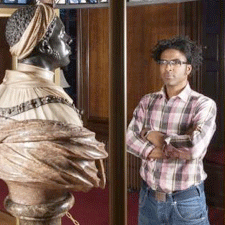
    Photo: Artist Graeme Mortimer Evelyn with his installation ‘Call and Responses: The Odyssey of the Moor’.
    Courtesy of www.voice-online.co.uk

    Award winning novelist, Delia Jarrett-Macauley, has recorded an audio response to ‘Call & Responses – The Odyssey of the Moor’, an installation by artist Graeme Mortimer Evelyn. His site specific contemporary piece is currently on show within The Queen’s Gallery at Kensington Palace. Delia’s audio recording, entitled ‘I’m Lonely, I’ll make me a world’ can be found on Soundcloud.

  • The Life of Una Marson 1905-1965

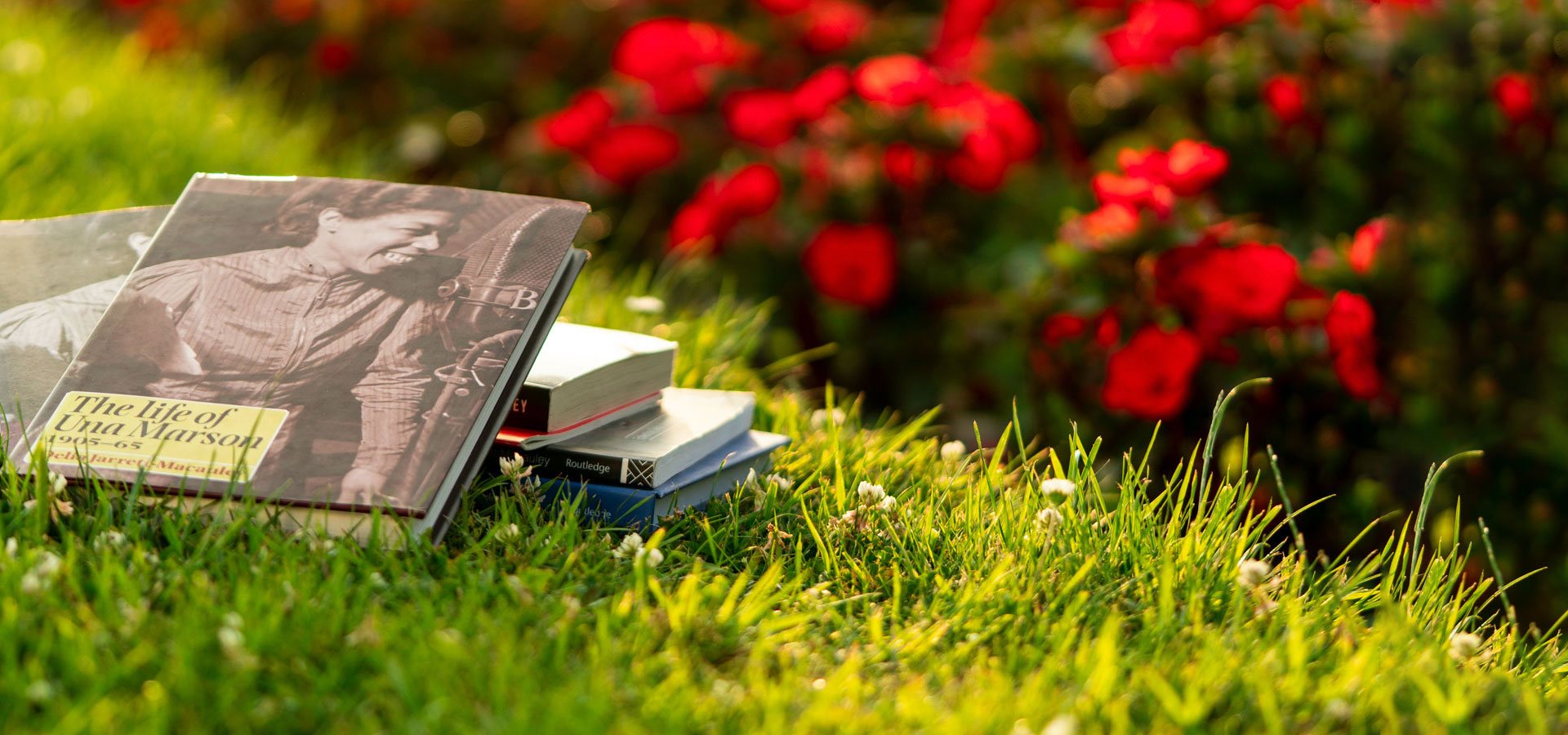
    The Life of Una Marson 1905-1965

    Publication date: 1998; reprinted 2010
    Publisher: Manchester University Press (1998, 2010)
    ISBN: 9780719082566

    Buy at Amazon

    A biography of Jamaican feminist, activist and writer Una Marson, who established herself as a pioneering journalist, playwright and poet in the early 1920s. She travelled to London in 1932, meeting leading black figures such as Haile Selassie, before working for the BBC during World War II.

    In this enlightening work, Marson emerges as a prime narrator of major themes affecting Black women writers of Caribbean origin. This book was originally published in 1998.

    Delia was invited to discuss Una Marson’s life and work on BBC Radio 4‘s Woman’s Hour – click here to listen to the full broadcast.

    Note: For permission to quote from the literary works of Una Marson, please contact The National Library of Jamaica, 12 East Street, Kingston, Jamaica.

  • On Winning the Orwell Prize

    On Winning the Orwell Prize

    Delia’s thoughts on some of the misconceptions surrounding Moses, Citizen & Me, and how she sees the Orwell Prize as recognition of her novel’s unique and measured approach:

    “Eighteen months ago when the proofs of Moses, Citizen and me were circulating, I received a call from an early reader who said, ‘Well done, its not really about child soldiers, is it?’

    The conversation which followed assured me that other readers would see beyond the characters to the meaning of the work and might even take pleasure in the story.

    Although it is true that the war’s bare ingredients were tailor-made for fictionalising – a rich welter of ‘characters’ including child combatants, dramatic scenes, vicious fighting and the rest – it struck me as unseemly to even attempt to make personal or cultural gain from the sufferings of my ancestral country.

    However, I dared to proceed, even at the risk of making a complete fool of myself, to tackle the war because it raised such important literary challenges: the peculiarly human talent for re-inventing the self, the question of colonial history in Africa, the variations of African cultural life. I threw myself into writing and then into a period of research because although I was not concerned with documentation of fact, I had to grapple with it in order to understand the moral complexities of what had happened.

    Moses, Citizen and me is narrated by Julia, a thirty-something British woman of Sierra Leone family. Her tale of home-coming and re-awakening interlocks with the project of uncovering Sierra Leone through her encounters with her uncle, cousin, neighbours and the landscape itself. Julia confronts the most difficult frontiers – the geographic borders with Liberia, the rainforest, the poorly sutured inner and outer landscapes. In all this, no encounter permeates her re-awakening more fully than that with Bemba G’s recalled child soldiers.

    Does this make it a child soldiers’ novel? I don’t think it does, at least not in the way most people are led to understand this.

    Many African countries including Sierra Leone and its neighbours are not sufficiently well known in Europe or America to encourage mature literary treatment: write from the inside, and there are bound to be challenging elements, but it is important to write nevertheless without footnoting, without patronising and without debasing oneself to the level of meaningless generalisations.

    I’m delighted to have won the Orwell Award for political writing: it is perhaps the most elegant acknowledgement of the novel’s intentions, accessibility and merit. Coming at the end of a hard road to publication, the award has been a great serendipitous gift.”

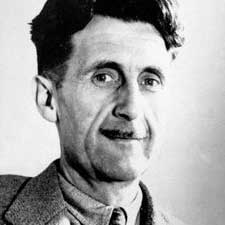
    The Orwell PrizeBritain’s most prestigious prize for political writing, is named after the great George Orwell (pictured), author of ‘Animal Farm’ and ‘1984’.